Philatelic Stamp, Comic, Baseball Card and Art Collection Care and Preservation
Are you a comic, baseball card, art or stamp collector interested in increasing the value and rarity of your comic, baseball card, art or stamp collection?
The stamps below illustrate damage that the 4 P’s can inflict on your stamp, comics, baseball cards, art and other paper based collections.
This site was elaborated in collaboration with the French site : https://www.tarif-lettre.com/prix-timbres
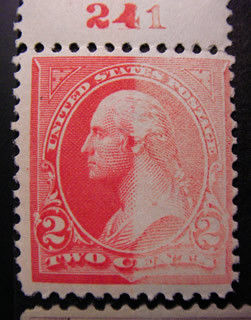
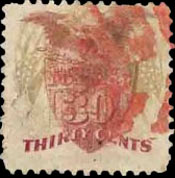
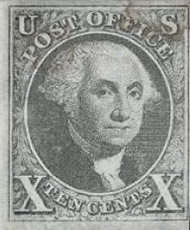
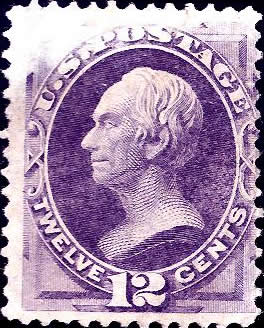
the 4 P’s in Philately
Paper, Plastic, Precipitation (humidity), and Photons (light) can harm your comics, baseball cards, art, stamps and stamp albums.
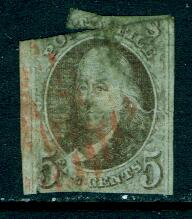
Or you can first visit Plastic and Visible Light to view photos that show the harmful effects that light and some plastic storage products can have on your comics, baseball cards, art, and stamp collections and stamp albums.
About Us
Whether you agree or disagree with the information or opinions expressed on this web site, or have different or more current information than that presented, we welcome you to Contact Us with your comments, suggestions, and feedback.
As a young child I collected stamps. I have relatively recently reentered the hobby to be astonished at the orgasmically high prices that many are willing to pay for seemingly common stamps (condition rarities), some of which on a dollar per ounce basis are more expensive than many well known works of art. In view of these valuations, I fully expected to find that the standard of care given to philatelic items to be the same or better than that given to our larger sized paper cousins (i.e. painting, prints). Whether from seeming indifference or ignorance, such does not appear to be the case.
I posit that if our hobby is to ever survive and/or be of interest to those that presently think of it as something a bunch of old men with magnifying glasses looking a “little” pieces of paper in the dark do, a paradigm shift within our community needs to occur with regard to the way we think of and treat our collections. Why is it that “big” pieces of paper are treated with so much respect, is it perhaps in part because of the built up base of knowledge that those in the fields of art have accumulated with regard to care of their collections? Is it perhaps because the respect with which “expensive” art is treated and the acknowledgement that for it to retain its value it needs to be cared for? Is it time for our “Stamp Art” to be respected and treated with the same consideration?
The pages of this web site chronicle some of my explorations on the topic, as well as some of my opinions. You can ignore my opinions if you wish, but I hope that in the process of making your decision a “seed of knowledge” may have been planted that will germinate in time for our hobby to survive and grow with a vigor that we can only imagine.
Begin your philatelic care explorations with a bright and illuminating statement …
If you lower your lights, protection of your stamps, baseball cards, comics, and paper based art increase by a factor of 1000x, or even more.
Need proof? … mouse over the stamp below and view an example of the damage you may be subjecting your philatelic, stamp, and art collectibles to.
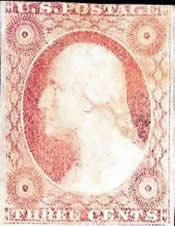
- Are you interested in protecting your stamp, baseball card, or comic book collection from the type of damage the stamp above has experienced?
- Do you want to increase the value or rarity of your collection, stamps, comic books, baseball cards, or even Stamp Art?
- The pages that follow provide stamp, baseball card, and comic book collectors with easy (and some not so easy) steps that can be taken to preserve the contents of their stamp albums.
Let’s consider the two Scott 121b stamps shown at the right. Can you determine which of them in 2002/2003 sold for $9000 and which sold for $40,000. Might some of the disparity in price be due to the fading that one of the stamps suffered via its exposure to light?
By reducing exposure of your philatelic items, and other light susceptible items, to light, you can take your first step toward increasing their rarity and value … not just via an increased likelihood that your care will help preserve them longer into the future (i.e. their rarity) but, as well, via the reduced damage your philatelic items will sustain over this same period of time (i.e. the rarity of their condition).
The images on this and other pages of this web site are meant to give the associated text “real world” meaning; but be forewarned … to fully appreciate their meaning, you will need to devote more time than just a cursory review of the accompanying subject matter.
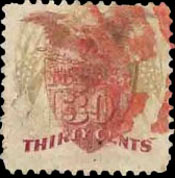
Let’s begin with:
a summary of techniques you can implement to preserve your stamps, philatelics, baseball cards, comic books and other paper based art collections:
-
Use only the amount of VISIBLE light that is necessary for comfortable viewing of your baseball card, comic book, art and philatelic and stamp collections; typical office/room/exhibition illumination should be avoided. First easy steps that you can take include: lower the wattage of the room lights used in your collection viewing area, and use of lamp and window shades to block any direct exposure to light that may be present (see Philatelic effects of VISIBLE Light for more detail).
-
Mimimize exposure of your comic book, baseball card, art and stamp treasures to ultraviolet light, by which we mean, not only to the UV light present in normal room illumination, but particularly to the high intensity light of UV lamps that are used for philatelic authentication and expertization. Just as in step 1 above, to reduce UV light induced damage you can lower the wattage of your room lights and use lamp and window shades (see Effects of UV Light on items of Philately for more detail).
-
Use only alkaline buffered ISO 9706 certified paper products to store and display your baseball card, comic book, art and philatelic stamp collections. (see Philatelic Effects of Paper for more detail). Baseball card, comic book, and philatelic paper products and stamp albums that are “pH neutral” and “acid free” WILL NOT stop the acidic degradation that philatelic items are inherently subject to and, therefore, should not be used for long term paper based and stamp storage and care. For stamps,don’t forget that stamp hinges are a form of paper also, and that the vast majority of stamp hinge products are acidic, which will damage any collectible you use them with.
-
Use only PET “Mylar ®” polyester archival grade plastics. Do not use plastic holder or plastic mounts that use UV inhibitors or UV coatings to archive and protect your paper based collections. All types of plastic, other than PET “Mylar ®” polyester archival grade plastics expose your paper collectibles to future, if not immediate. (see further Effects of Plastic on Stamps for more detail).
-
If you choose to encapsulate or encase (slab) your baseball cards, comic books or or stamps, you should do so with the understanding that a harmful “micro-climate” may become formed within the encapsulating plastic or glass material that is used. The sealed environment that is formed within such slabs can under many conditions accelerate harmful chemical processes that are inherent to the organic matter that your paper based comic, baseball card, and philatelic stamp collectibles are made from. Always ensure that encapsulated comics, baseball cards, and philatelic stamps are provided with a means by which they can be regularly ventilated.
-
Store and display your comic, baseball card, and stamp and philatelic collections under as steady an environmental condition as possible, preferably at about 68 degrees F and between 30-55 % relative humidity (RH) (see Effects of Temperature and Humidity on Stamps for more detail). As with encapsulated stamps, comic book, baseball card, and philatelic stamps stored in albums should be periodically ventilated.
-
Store and display your comic, baseball card, art, philatelic, and stamp collections in as pollutant or pollution free environment as possible (i.e. sans smog, cigarette smoke, ozone, incense …)
-
For stamps, minimize, and preferably eliminate, exposure of your stamps to the residues of watermark fluids, cleaning fluids, tap water, archival sprays and other chemistry experiments you may be tempted to inadvertently perform on them. Use of these common used stamp procedures WILL leave residues that cause degrading reactions that over time WILL build up and WILL damage your philatelic and stamp collections.
-
Keep in mind that in particular, stamps are as fragile as art; treat your stamps and philatelic collections accordingly.
Can failure to follow steps 1-9 affect the future value of your baseball card, comic book, stamp or art collection?
Let’s consider this question in the context of the Marilyn Monroe stamp. Although the Marilyn Monroe stamp is arguably aesthetic, it is of such high mintage and recent vintage that its history, rarity, and value is considered by some to be of little importance.
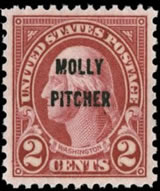
However, imagine, if you will, that Marilyn (the stamp) might somehow be transported to a time in the past, say to the year 1928. If you consider the return journey Marilyn might take to the present from this past, it might not be so much different from that of the relatively high mintage 1928 Scott #646 stamp shown below.
Recent examples of the #646 have experienced a many hundred fold increase in their catalogue value. Why is this relatively common stamp so expensive ($2300 was one auction sales price)? Could it be because of its rarity … by which we mean the rarity of its state of philatelic preservation, which includes the condition of its gum, paper, ink, centering, and countless other attributes that now grace its owner’s stamp album. Whatever the reasons for the recent exponential increases in value of many of the condition rarities (like the Scott #646), in no small part the philatelic care and stamp care topics we discuss on the following pages will have played an important part.
Now consider, if you will, how during its journey from the past to the present, the Marilyn Monroe stamp could survive to be a condition rarity as is the Scott #646 stamp above. Equivalently, consider a journey of the Marilyn Monroe stamp 60 years into the future. During its journey, will the Marilyn Monroe stamp be somehow treated to lose its beautiful blue color and/or some other valued attribute (i.e. via failure to use proper philatelic preservation techniques)? Or will Marilyn be treated with the consideration and care that is asked for by this web site, such that it will someday be valued equally with the Scott #646 stamp? Both Marilyn and the other stamps in your collection await your answer.
A final comment before you visit our other pages:
The amount of cumulative illumination (in lux) that many of (y)our philatelic treasures have been exposed to in the past, and continue to be exposed to in the present, cannot be beneficial to the health or future of (y)our hobby. Whether deliberately, or from ignorance, (y)our actions may be placing (y)our present and future ability to study and enjoy (y)our collections at risk. With regard to items of particular aesthetics, history, and value, it is incumbent upon you to minimize exposure of your philatelic, comic book, baseball cart, and art items to VISIBLE light. Failure to do so will cause their eventual demise, sooner than later!
As you explore other pages on this web site, consider if there is at least one small step you might be able to take to benefit your baseball card, art, comic book or stamp collection, and in the process yourself.
Remember: the preservation and care of paper based collections and stamps in particular cannot occur without your active participation.
Care of Stamps
Why You Should Care for Your Collectible Rare and Old Stamps and Paper Art
Whether or not you consider your philatelic and stamp items to be art, your old postage stamps have in common with art that they are both perishable, not only because of past events and processes over which you no longer have control, but also from present and future preservation and care you as a philatelist may fail to apply to your old stamps .
Many of us would like to ignore that without extra effort on our part, our paper based rare stamp treasures will eventually decompose and disintegrate to dust, perhaps even in our own lifetimes. The United States Declaration of Independence is an example of one humble piece of old paper that might not have survived, but for the relatively recent extra efforts taken to preserve it.
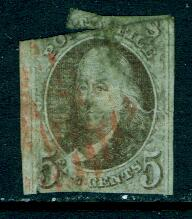
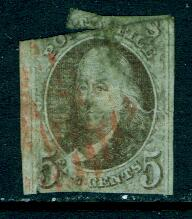
After you finish reading the following paragraph, ask yourself the question, could it be that the small pieces of philatelic paper that you and I enjoy so much will suffer the same fate as the 1847 Scott #1 below?
“What I find remarkable is that we are nervous about our stewardship for a scrap of nineteenth century paper that issandwiched between a layer of corrosive ink and a smear of gum. Our historical charge was born in a coal-firedpressroom, dried and cured in a warehouse filled withthe acidic stench of an industrial city; it was hefted and hoisted and handled by men and boys who washed but once a month, and laid out then for a month in a drawer of foul inks, glues and gums until a charwoman paid a pence for it, and gave it to a eight-year old girl who licked away most of the gum and smushed the remains with sticky fingers to a rag-based envelope. Our charge then sat there for weeks in the damp bottom of a canvas sack, among the dead rats in the hold of a leaking wooden ship before the dripping bag was hauled ashore through the mud by thoughtless natives sweltering in the tropical salt sea morning – and hauled again, and tossed and sat upon until it was called for by a boy and a dog cart. Our stamped envelope may then have been taken to the big house where it was delivered through the odorous, splatter-spilled kitchen, to a servant who open it with a fish knife, finally, and delivered it’s contents to the master who raged about it’s message, tossed it and stomped on it and fetched it to the bin, from which it was saved and stacked and tied tightly into a bundle of its kind – and where it lived for a hundred years at the bottom of a wooden trunk. Through heat and hurricanes and floods, our stamp survived unimaginable wars, plagues and pestilence in the company of a child’s chemistry set, a box of damp linens and a tin of melted chocolate. And one day in our century, a ten-year-old boy found this envelope and popped it into a pot of boiling water, which floated the stamp free to dry on a sheet of yellowed newsprint. Pressed beneath five volumes of Holcomb’s World History, our small scrap of paper was finally consigned to a penny album, fixed with a bit glued tissue, and there was pressed for fifty years until it was discovered to be a rare shade of burnt umber and hurried to an auction house in New York City. One wonders, then, about the effects of a drop of hydrogen peroxide?” Reprinted with permission of Richard Coffey; all Copyrights reserved
Are you the steward of one of the rare stamps of the world or the owner of a stamp worth only for its particular aesthetics or stamp history? Regardless if your stamps collection is composed of the rarest stamps or only common topical stamps, your philatelic collection’s future depends not only on its past treatement, but also on the present harmful effects of visible light, ultra violet light, temperature, humidity, pollutants, paper, and plastic.
With regard to how much and what type of care you should expend to protect your stamp collecting albums and the treasures within, the following pages will try help you make that determination.
Effect of Paper Products
Paper Album Pages can Cause Harm to Your Stamp Collection !
For many a stamp collector, memory of their high school chemistry has been re-lived when a just opened stamp album or philatelic storage container has revealed a discolored or damaged remnant of what was formerly a pristine philatelic treasure. For those that have responded to such displeasure by investigation and purchase of supposedly protective and “safe” philatelic paper products, the association of the term “best” with "acid free " and “pH neutral” should be something that should be reconsidered.
“Acid-free” and “pH neutral” paper philatelic products are NOT your the “best” choice !!
So what, if anything, is wrong with paper products that are “acid-free” and “pH neutral?” The good news is that paper philatelic products made with pH and acid free qualities in mind will fade, discolor, and eventually disintegrate less rapidly than their acid based cousins. On the other hand, the literature of many manufacturers and philatelic distributors of “acid-free” and “pH neutral” paper products implies that such qualities will also in some way be transferred to the inherently acidic stamp and philatelic items they are meant to be used with. However, all that these adjectives should be read to mean is that (on their own) “acid free” and “pH neutral” philatelic products will cause no immediate damage.
In fact, over time, acid free and pH neutral paper will turn acidic, either from their own internal decomposition (albeit via a slower process than that which occurs in acidic papers), or from external influences (such as transfer of acidity from the stamps mounted to the paper the stamps are mounted on, from interactions and decomposition of plastics, and/or interactions with the environment).

Still not convinced … these 2 stamp images will illustrate why acid free pH neutral paper is not your best choice.
The discolored stamp to the left was framed and mounted onto acid free pH neutral paper. The undamaged stamp on the right was mounted on archive grade alkaline buffered paper. The two stamps are shown after they were subjected to a pollutant (a component of smog) in an accelerated aging test.
It is for this reason that museums do not use acid free and pH neutral paper products with their treasured items; instead, for display and storage of inherently acidic philatelic items, museums use archival grade “alkaline buffered” paper. The reason being is that when inherently acidic paper items such as stamps are mounted on archival grade alkaline buffered paper, the acidic reactions within the stamps become neutralized by the alkaline buffered paper (not convinced - look at the rightmost duck stamp above). During the period of time that the acidic reactions are neutralized, the life of an acidic item is extended (a benefit that “acid free” and “pH neutral” paper cannot provide), but it should not be forgotten, given enough time, the alkaline reserve within alkaline buffered paper products will become depleted.
Thus, unless alkaline buffered paper products are monitored for their efficacy and replaced when needed, the harmful reactions within any acidic items (i.e. the paper items that philatelists typically collect and enjoy) they are being relied upon to protect will eventually begin anew. See brief background info on acidic and alkaline paper manufacture and ISO 9706 standards for archival grade paper products.
In summary:
-
Archival grade alkaline buffered philatelic paper products will protect your philatelic collection by extending the time before damage occurs in the paper products themselves, or from the acidic items they are intended to protect (the right stamp above).
-
By corollary, acidic items mounted on “acid-free” and “pH neutral” products will degrade more quickly than if mounted on archive grade alkaline paper products (the left stamp above).
(Warning: the alkaline reserve within buffered paper can harm textile based and photographic based collections; DO NOT use alkaline buffered paper with textile based and photographic based collections).
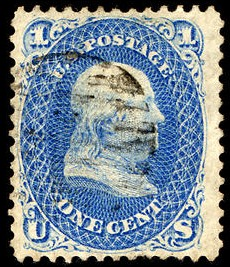
Still sitting on the philatelic fence? … then try to imagine a day in the future, a day that you may decide to revisit your stamp collection, only to open your stamp album or philatelic storage box, and instead find a damaged version of a formerly pristine treasure. The only two 1868 Z-grill stamps known to exist are shown to the left; the stamps illustrate that the type of stamp care you lavish on your philatelic collection can be repaid not just in value, but in aesthetics as well.
The leftmost stamp has been in the care of museums for a large portion of its life, while the rightmost stamp has been held mostly by private collectors. We do not presume to know the actual reason(s) for the difference in appearance between the two stamps. Nor do we presume to make a conclusion as to which of the two are the more attractive. But, despite our lack of commitment, there “is” a reason for the difference in their appearance. Perhaps the reason stems from photographs that do not accurately reflect true colors or condition of the two stamps. Or perhaps the difference in appearance resulted from exposure of the stamp plastic, pollution, improper humidity and temperature; or excessive exposure to VISIBLE light or ultra violet UV light. On the other hand, perhaps the difference in appearance was caused by storage of one of the stamps in on “pH neutral” or “acid free” stamp album pages?
Given a choice between archive grade alkaline buffered stamp papers and the currently sold and commonly used “acid free” and “pH neutral” paper products, use of alkaline buffered paper is a protective choice that should be implemented sooner than later. By doing so, you will not only extend the life of your philatelic and stamp items, but as well, increase their value. Note 1: verification of the current state of the acidic or alkaline nature of your stamp pages, philatelic storage container, matting material, etc., can be made via a PH pen, whose applied ink will change color based on the acidic or alkaline content of the paper product it is applied onto. Note 2: - PH pens will leave residues and marks and should not be used directly on your philatelic items.
Are you now willing to implement use of alkaline buffered paper with your collection? Your philatelic items, stamps, and art await your answer.
Effects of Plastic
Protect Your Old Stamps, Philatelics and Art from the Harmful Effects of Plastic Stamp Products
The topic of plastics involves an understanding of chemistry and physics that most people trust manufacturers and distributors of plastic stamp collecting supplies to have.
Unfortunately, as evidenced by the harm and damage many of these plastic products continue to inflict on many of our stamp collections, this does not appear to be the case. View the material presented below and other pages to view examples of stamp holders and stamp mount products sold by “trusted” manufacturers that over time have failed to live up to their promises made.
CAUTION … ALERT ! … read below to understand why many philatelic mounts and holders sold as “inert” and “safe” may not be what they purport to be !
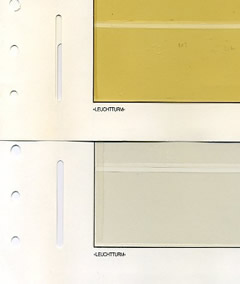
Our first example below shows lower left portions of a stamp sheet holder sold by a well known manufacturer of philatelic and stamp products. This plastic product is intended for display and storage of philatelic and stamp items. The top sheet has started to decompose and turn a discolored yellow brown, which is a sign that a chemical breakdown of the plastic has begun. Any paper items held within or by this plastic product will be exposed to its chemical reactions and eventually will be damaged. The bottom sheet is shown before the appearance of any breakdown. These “safe” stamp holders implicate the philatelic products of other manufacturers, who in many cases also purport their plastic products to protect and be “safe” and “inert”, even when they are knowingly disclosed to comprise rubber, adhesives, paper, etc.
It is easy to assume that just because no damage is presently evidenced by your collection, that continued display and storage of your stamps in plastic based holders will cause no such harm. However, given enough exposure to external influences (VISIBLE light, UV light, temperature, humidity, pollutants…) all plastic products will eventually degrade and, thus, cause degradation and damage and reduce the value of stamps in your collection.
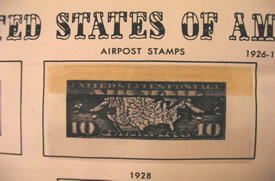
Need more proof? Below is an image of a “Crystal” brand plastic stamp mount product sold in the 1970’s. Do yo see how the adhesive that was used to affix these stamp holders to the album pages and that over time it has discolored? Although the clear plastic itself appears to not have changed color (yet), the yellowing of the adhesive is an indication that decomposition of at least part of the product has begun. Given enough time, the chemicals of the adhesive will migrate through the clear plastic of the holder to - if you have paid attention you will know where - the stamp held by holder. This is just another example why all collectors should be skeptical of claims made by manufacturers of stamp collecting supplies. DO NOT assume the plastic products you are using are safe … verify any claims made before entrusting your top value stamps to an unknown future under plastic.
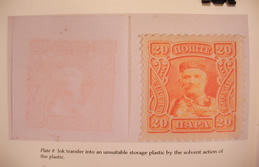
The next example illustrates actual damage caused to a stamp by a plastic holder. In the image, ink from the stamp on the right is seen to have been transferred onto the plastic of the holder shown on the left. The transfer was caused by interactions with components of the plastic and the ink of the stamp. You should ignore this and other images only if stamp valuation is not of interest to you. Image from Collings and Schoolley-West, The Care and Preservation of Philatelic Materials, London and State College, The British Library and the American Philatelic Society, 1989, reproduced by permission of the British Library
“To many people, plastics materials all appear the same but their variety is enormous. Many contain plasticizers, which act as molecular lubricants and are incorporated into the plastic’s manufacture to increase the flexibility of the plastics in sheet form. These external plasticisers can volatilize and cause the plastic to become brittle or migrate into adjacent material where they can act as solvents for many inks, particularly gravure printing inks, ball-point and felt-tip pens and typewriter inks. Polyvinyl chloride (PVC) plastics have been commonly sold for storage of stamps, postcards, first-day covers, etc and are amongst the worst offenders. In addition to the plasticiser problem, PVC degrades to emit acid gases which can migrate into adjacent materials. Under no circumstances should PVC be used for any long or even short term storage.” Page 43 of Collings and Schoolley-West, The Care and Preservation of Philatelic Materials.
In addition to PVC (polyvinyl chloride), four other types of plastic have been and continue to be commonly advertised and sold as mounts, holders, slabs, sleeves, and pages for storage and display of collectible stamps:
- PET - polyethylene terephthalate (marketed as “polyester” or “Mylar®” or Melinex®)
- PE - polyethylene
- PP - polypropylene
- PS - polystyrene
Which of the above plastics is safe? Although the answer will depend on the vested interest of who is giving it, the point to be remember is: given enough exposure to external influences (VISIBLE light, UV light, temperature, humidity, pollutants…) ALL plastic products WILL eventually degrade.
So how long are you willing to wait before your stamps are damaged by your use of harmful plastic stamp products? In the case of common stamps and collections, their stamp value may not justify our time and expenditure, but what about your philatelic rarities?
Archive grade PET (Mylar®) polyester is considered by those in the archival and conservation fields to be the most “safe” plastic.
At this time, archive grade PET “Mylar®” polyester is the only type of plastic product that is recognized “safe” for preservation of collections by the United States Library of Congress Preservation Office, which has very stringent requirements for the “protective films” used for their archival storage. Their “[c]omposition must be clear, colorless, (biaxially oriented/stressed/drawn) polyethylene film such as DuPont Mylar© D, Melinex © 516 or equivalent. The clear and colorless polyester film must not contain any plasticiser, surface coatings, UV inhibitors, or adsorbents and be guaranteed to be non-yellowing with natural aging. As received, the film must not contain any coloring agents. A certification of compliance with the above requirements must accompany the shipment.” (The Library of Congress, Specification Number 400-005-1/93). See brief background on other types of plastic for more info.
As mentioned in the paragraph above, to be considered “safe”, PET type plastics (as well as other plastics you may be tempted to use) should not contain any UV inhibitors. This requirement places a user of PET plastic in what is perhaps a Catch-22 situation. One of the mechanisms by which PET plastic “is” known to degrade, is by exposure to UV light, in which case, because we all want to from time to time to look at or display our stamps, and to look at our stamps we need light, if the light contains any UV component, even PET plastic can, thus, be a cause of damage. How can you avoid such damage … it’s simple, avoid/minimize exposure of your stamps to UV light (see Effects of UV light).
Keep in mind, it has been suggested it may be too early to draw any conclusions with regard to protective qualities of archival PET polyester based plastic products as they have not yet been areound for long enough to know if they can withstand the ultimate test of time. For example, as is discussed on a separate page under the topic of micro-climate, your stamps may be damaged by plastic (even PET) in other ways than we have discussed on this page.
Accordingly, consider the information above with the caveat, even archive grade PET polyester plastic products may eventually be found to be harmful sometime in the future.
However, if you choose to use plastic products with philatelic items of particular aesthetics, philatelic history, and stamp value, archive grade PET polyester based plastic products can presently be considered as being your “best” choice.
So, are you ready to implement use of archive grade PET (Mylar®) plastic to store your old stamp collection?
Effects Temperature, Humidity and Pollutants
The Effects Temperature, Humidity and Pollutants have on Your Old Postage Stamps
For those that wish to skip over the hot, humid, and somwhat dense detail below, the lesson taught below is this: although the effects of temperature and humidity can be difficult to fully understand, and expensive to fully control; you can nevertheless minimize and slow the damage that your old postage stamps are at this very moment experiencing by following some easy to implement steps.
The photos, charts, and discussion below provide examples of the types of environmental damage your collectible stamps, philatelic collections, and art can be subject to on a daily basis.
You can never hope to completely shield your philatelic stamps from pollution temperature, and humidity, however, you can slow their harmful effects. The graph to the left helps to visualize the damage that particular combinations of relative humidity (RH) and temperature can cause to philatelic materials that are exposed to hydrolysis (i.e. repeated water vapor de/absorption by paper, stamps, prints, etc.). As one moves upwards along one of the curves in the graph, every combination of temperature and relative humidity will cause philatelic degradation at the same rate. For example, along the curve marked x4, four times as much damage will be experienced by stamps in stamp album pages as compared to the curve marked x1. The area below the purple overlapping 4C dew point curve is inaccessible to the average climate control system. Only the most expensive of systems can establish climactic conditions below the purple curve. For example, 8C at 75% RH and 18C at 40% RH are achievable by the average air conditioner/dehumidifier, but not 8C at 40% RH. Another point to note is that low temperature and high humidity will cause less damage to your philatelic stamps than high temperature and low humidity. But if my stamp album pages are stored in high humidity conditions won’t they be exposed to mold growth? The graph to the right illustrates that mold growth is dependent on temperature, and that high humidity can be tolerated by old postage stamp collections as long as temperature is kept relatively low; in other words, as long as you keep your climactic conditions below that represented by the area below the solid black line in the graph presented to the right.
Protective steps that you can take to protect the philatelic value of stamps and art from the environmental effects of temperature, humidity, and pollutants:
- When storing and displaying your stamp collecting albums, if given a choice of low humidity and high temperature, or high humidity and low temperature, generally the latter is preferred (see discussion and graphs above).
- Similarly, maintain a stable relative humidity, which will reduce repeated de/absorption of water vapors, which over time can also destroy your collectable stamps.
- Do not attempt to maintain a very low, or no, humidity environment. By doing so, hydrolysis susceptible items (eg. your united states postage stamps) can dry to the point of becoming brittle to the touch.
- Maintain the stability of the temperature that your philatelic and stamp items are stored and displayed in; by doing so, temperature induced contraction and expansion of your old postage stamps will be reduced, which will in turn reduce the mechanical stresses and strains that will eventually rip your philatelic collection apart.
- For paper based philatelic collections many museums try to maintain a stable temperature of about 68 degree F, and depending on the season, a relative humidity between 30-55 RH.
- Lastly, the above suggestions have been formulated in the context of collections that are susceptible to hydrolysis (i.e. paper, stamps, art, prints, etc.). The effects of temperature, relative humidity, and pollutants become much more extreme and difficult to predict and, thus, more important to control, particularly when considered in the context of use with other stamp collecting supplies (see Effects of Paper and Effects of Plastic).
So given the information above, what might some of the reasons be that the rightmost Scott #523 stamp below has suffered oxidization damage. Both images of the #523 were posted on a respected philatelic web site during a discussion about the types of plastic materials that are typically sold and used by philatelists for storage and display of their collections. The discussion generated a large amount of information, but no final conclusions. The stamp on the left can be seen to retain its original orange red color, while the stamp on the right is seen to have lost this same color via oxidization. If it had been indicated during the discussion that the stamp on the right had been stored in the plastic holder shown on the page dealing with Effects of Plastic, the oxidized condition of the stamp might possibly be explained by chemical decomposition of the supposedly “inert” plastic the holder used to store this stamp was made from. For example, if sulfurous compounds were used in the manufacture of the plastic holder, the oxidized appearance of the stamp on the right above could be explained by interactions that might have occurred between the compounds and the stamp’s ink (a known process by which certain fugitive orange and red inks are susceptible to). On the other hand, archive grade PET “Mylar®” polyester plastic holders (to the extent tested and standardized by the Library of Congress) are considered to be “inert.” Because it was indicated by the auction house that the stamp on the right was stored in an “inert” plastic holder, presumably the oxidization damage could not have been caused by degradation of the plastic holder itself. Unfortunately, only conjecture is possible, as all the added information that would be needed to make a final conclusion is not available. Nevertheless, some hypotheses are formulated for your consideration below. However, before proceeding to the hypotheses, consider, if you will, some more information about effects the environment can have on your postage stamp values:
Certain lead components in particular ink colors tend to react with sulphur hydrogen, which comes to the air when organic material is decomposing. This sulfer may originate from paper products (including the paper stamps are made from), forms of rubber or plastic, adhesives, and pollutants in the atmosphere;
Plastic, whether “inert” or not, is permeable. Reactive gases and pollutants will over time, diffuse from outside to within a plastic holder or mount (PSE slabs included); take this into consideration when storing or displaying philatelic and stamp collections in a smoke filled or polluted atmosphere (Los Angeles … ). Also, take into consideration that because these processes occur over time, “im/permeable” should be considered a relative term;
To satisfy the requirements of the Library of Congress, archive grade PET “Mylar®” plastics cannot contain any UV inhibitors, which can decompose and cause damage over time. Thus, if intended to be placed in physical contact or to be used in close proximity to your stamp collection, your archival PET 'Mylar®" polyester plastic products should not be expected to provide any protection against UV light (see Effects of UV light);
When a semi/sealed plastic mount or holder is used for storage or display of collections, any by-products of the decompostion the collections may expereince may become trapped within the interior space of the plastic holder or mount. Unless the plastic mount or holder is allowed to breathe, a “micro-climate” can become formed within the holder. The formation of such a microclimate can act to amplify the decomposition of the philatelic stamps and/or that of the plastic compounds the mounts or holder are made of. The implications of sealing paper within a micro-climate has only recently been studied and has been identified as also being capable of being formed between the semi/sealed paper pages of stamp albums and in philatelic storage containers;
Even 100 years ago it was noted that many classic stamps changed colors and oxidized when subject to humidity. Because water vapor can enter or diffuse and become trapped within the “micro-climate” of a semi/sealed plastic holder (as well as within the semi/sealed paper pages of stamp albums, philatelic storage containers, etc), philatelic and stamp items may inexplicably and seemingly overnight be oxidized or damaged;
Every time a stamp is dipped in watermarking fluid, every time it is “brightened” with peroxide, every time it is “cleaned,” every time it is touched, every time it is rinsed in tap water … is one more accelerative step toward its destruction. The residues from each of these events are cumulative, and in combination with environmental factors discussed above and below, WILL accelerate your philatelic collection’s eventual demise.
There are many ways that environmental factors can damage your philatelic collection. In combination with use of paper and plastic products that are not alkaline buffered or archive grade PET polyester plastic (Mylar®) based, the damage will be accelerated. By failing to consider and act on this information, the time that you have left to enjoy your items of philately may be shorter than you realize.
Some hypotheses and explanations that may help explain the damage suffered by the stamps above and below:
Hypothesis: to the extent archive grade PET "Mylar® polyester plastic holders are permeable, the oxidized stamp on the right above was exposed to a sulphur hydrogen rich atmosphere, which evenly diffused through the plastic holder to cause its oxidization. Explanation: a low probability event - presumably the professional office environment that the stamp was stored in precluded its exposure to atmospheric pollutants of this variety. Note: the conclusion should not be construed to imply that “your” philatelic collection will not be subject to damaging atmospheric pollutants - for example, from use of cigarettes in the vicinity of your stamp collection, or a city environment where smog is common, or even from sources of ozone.
Hypothesis: to the extent that archive grade PET “Mylar®” polyester plastic is permeable, the stamp on the right above was stored on, or in the vicinity of acidic, acid free, or pH neutral paper, which decomposed due to environmental factors to a point that it produced harmful by-products that diffused through the plastic holder to cause the oxidization damage that is shown. Explanation: in view of all the many supposedly “safe” philatelic paper products that are currently being sold and used, this last hypothesis is within the realm of possibility, however, presumably the party that stored this stamp in the plastic “inert” holder knew not to do so in the vicinity of acidic paper. Note: the lesson taught by this hypothesis can be avoided if, from the start, the use of all but archive grade alkaline buffered philatelic paper products is eliminated. This warning applies as well to those clear “inert” plastic products that are sold with paper backing, in which case both paper and plastic should be verified to be archive grade alkaline buffered and PET “Mylar®” polyester plastic.
Hypothesis: the stamp above on the right was exposed to ultra violet (UV) light, which caused its inks and/or paper to decompose. Explanation 1: because PET “Mylar®” does not contain any ultraviolet UV inhibitors, and if the stamp above was over exposed to ultra violet (UV) light, the stamp would probably first evidence direct damage via fading, not oxidization, but fading is not evidenced by the stamp. Explanation 2: if the plastic holder used to store the stamp was not “inert,” the holder itself could decompose from reactions caused by the UV light, the by-products of which could then oxidize the stamp. However, there was no discussion by the stamp auction firm as to the actual type of plastic holder used and, therefore, no conclusion is made in this regard. Note: although ultraviolet (UV) light is commonly mentioned as being a cause of damage, it MUST be remembered that both UV light and VISIBLE light cause damage, and in most cases exposure to VISIBLE light will be the primary cause of stamp damage (see Effects of VISIBLE light and Effects of UV light).
Hypothesis: the stamp to the right above was stored in a temperature and/or humidity that was not properly controlled, with either or both factors being the cause of decomposition of the acidic paper of the stamp, which in turn caused accelerated oxidization of the stamp. Explanation: the fact that the stamp is evenly oxidized across its surface is some evidence that the oxidization may have been caused by an evenly applied outside factor, such as from improper temperature, humidity, or pollution. Because the stamp could have been stored in an environment that had the wide changes in temperature over night and day, and week to week, as typically occurs in commercial office buildings, it is within the realm of possibility that the damage could have been caused by storage in, and exposure to, uncontrolled environmental conditions. Note 1: the conclusion reached above would be strengthened if the stamp was stored in a sealed holder. Note 2: if the stamp in question had been dipped in stamp fluid, cleaned with peroxide, washed in tap water, or exposed to any number of other countless tortures, the residues from all these factors could have built up to the point that the above damage to the stamp was further accelerated. Before repeating these sins, consider how many times did each previous owner of the stamp conduct such chemistry experiments, such as you might now be tempted to perform, in which case, is it any wonder why the stamp shown above (or the one that may presently be before you) might have, or be ready to, give(n) up its orange red color?
Hypothesis: to the extent an archival PET “Mylar®” polyester plastic holder is impermeable, such a holder containing the stamp could not “breathe,” and harmful by-products (from decomposition of the acidic stamp paper or polluted air within the micro-climate of the holder) caused or accelerated damage of the stamp. Explanation: the fact that the stamp is evenly oxidized over its entire surface may be evidence that it was stored within a completely sealed plastic holder, which could cause the evenly distributed damage that is evidenced over the entire surface of the stamp. However, there is no confirmation of this fact, and a just as possible scenario could be that the plastic holder was only of the semi-sealed variety, where at least one edge of the plastic holder was unsealed, in which case the damage evidenced would be more difficult to explain.
Hypothesis: in semi-sealed plastic holders, chemistry related damage typically begins to first appear (and is more pronounced) around the unsealed edges of the holder. Explanation: This type of damage can appear when stamps are stored in plastic holders of the semi/sealed variety (for example as seen on the Effects of Plastic page). With semi/sealed holders, air from outside first enters the holder along its unsealed edges; if sulphur compounds (that can be released by the holder, be present in the air, or in the stamp) are present, chemical reactions can occur and can be evidenced as oxidization that first appears along the corresponding edges of the stamp.
Your philatelic items and stamps can be damaged by the effects of temperature, humidity, and pollutants. Whether they be stored or displayed using paper, plastic, or some other means, these effects can only be exacerbated by exposures to VISIBLE and UV light, which are discussed on the pages that follow.
Effects of UV light
UV light and its harmful effects on your items of Philately
For sensitive materials (19th and early 20th century stamps), an accepted level of ultraviolet (UV) light is .375 uw/cm2 (micro watts per square centimeter). Compare this figure to that of typical room illumination, direct sunlight, and UV authentication lamps, which can produce respective levels of ultraviolet light on the order of 6 uw/cm2, 6000 uw/cm2, and 20,000 uw/cm2!
As with VISIBLE light, the effects of ultraviolet (UV) light are cumulative and irreversible, and overexposure will eventually cause the “light bucket” of your philatelic collection to overflow, for example, as by decomposition of inks, pigments, papers, plastics, and gums. As evidenced by the discolored, faded, and oxidized appearance of the plastics and papers used with many of our philatelic collections, overexposure to ultra violet light can also cause other types of direct or indirect damage. Because UV wavelengths of light do not help to make your stamp collection any more visible for viewing, their elimination or minimization should be considered to be a win-win situation.

Although ultra violet UV light spans the wavelengths of 260 to 400 nanometers (nm), the shorter 260-320 nm UVB wavelengths are mostly blocked by the ozone layer, by window glass, and are not emitted by typical home/office lighting. For this reason, elimination of UVA wavelengths of light is where efforts at minimization and elimination are normally directed.
UV resistant plastics and glass … are they safe to use with items of philately?
An observation is now made with regard to use of plastic holders, sleeves, and other storage and display materials. With regard to the plastic holders and sleeves used for display of stamp and philatelic items, many manufactures of these philatelic products like to tout their protective resistance to ultra violet light, however, what they typically fail to mention is that even if the plastic itself may be of the “inert” archive grade PET (Mylar®) polyester type (see Effects of Plastics), the coatings and compounds used to make their products ultra-violet UV resistant are not. If it is anticipated that UV resistant archival PET type plastics will be in physical contact or close proximity to items of particular aesthetics, history, or value, it should be only for limited periods of time, otherwise one evil (ultra-violet light) may end up being eliminated and replaced by another (the decomposing chemicals used to make the plastics UV resistant).
Effects of ultra-violet light on philatelic and stamps in home/office environment
One particular UV light figure of merit that should be of interest to stamp collectors is that of .375 uw/cm2, which is accepted by many museums as the maximum level of ultraviolet light that should be present in a 50 lux VISIBLE light environment. Note: 50 lux is the maximum amount of VISIBLE light that is recommended for viewing and displaying of 19th and early 20th century philatelic and stamp items.
The units of uw/cm2 are used to measure ultra-violet UV light and are relatively easy to understand (i.e. amount of power distributed over a given area), however, many museums prefer to measure ultra-violet light with specialized sensors that make UV measurements in units of microwatts per lumen (uw/lm); unfortunately these units are intuitively a little bit more difficult to understand. The units of uw/lm units represent the amount of ultra-violet UV light present in a given amount of VISIBLE light, where lumen is a measure of the quantity of light emitted by a source, and 1 lumen spread over 1 square meter is equivalent to about 1700 lux. For reference, a 100 watt incandescent bulb emits on the order of about 1700 lumen. Unlike measurements made in the units of uw/cm2, measurements made in uw/lm remain constant regardless the distance from a particular UV light source the measurement is taken.
The table below is a collation of UV light measurements that were made under different VISIBLE light levels. The recommended amount of VISIBLE and UV light for 19th and early 20th century stamps is indicated in blue. In a museum, a typical level of UV light that is acceptable is about 75 uw/lm. In units of uw/cm2, this same level is about .375 uw/cm2. At first glance, the 75 uw/lm level of UV light found in a typical home/office may appear to match the accepted 75 uw/lm of UV light in a museum setting, however, the two measurements are actually quite different when compared in units of uw/cm2. The reason is this: because the units uw/lm represent the amount of UV light present in a given amount of VISIBLE light, and because there is much more VISIBLE light in an office (300-500 lux) than in a typical museum environment (a 50 lux environment), 75 uw/lm in a 300 lux office represents a much larger proportion of UV light than is present in a museum. How much more can be understood by comparing the .375 uw/cm2 level found in museums to the 6 uw/cm2 level of UV light found in a home/office, which is about 16 times more UV light than is acceptable. As discussed shortly, this level can be relatively easily reduced to more acceptable levels.
The measurements presented in the table above were collated from a number of sources that were not all in absolute agreement. Other than the UV values given for the 50 lux condition museum level of VISIBLE lighting, the other values are given only for an indication of relative differences, not absolute values, which because of variances in measurement conditions and measurement instruments can vary by orders of magnitude.
| VISIBLE Light Condition | Typical UV power measured in uw/cm2 | Typical UV power present as a percent of VISIBLE Light |
|---|---|---|
| Direct Bright Sunlight | 6000 uw/cm2 | 500 uw/lumen |
| 300 lux in office/home with fluorescent lighting | 6 uw/cm2 | 75 uw/lumen |
| Office with low UV Fluorescent lighting | .5 - 2 uw/cm2 | 10 uw/lumen |
| 100 lux from 100 watt bulb at a distance of 3 ft | 1 uw/cm2 | 70 uw/lumen |
| Museum Lighting at 50 lux (19th and early 20th century stamps) | .375 uw/cm2 | 75 uw/lumen |
| 100 Watt UV Authentication Lamp measured at 2 inches | 9000 uw/cm2 | No VISIBLE light present |
| 100 Watt UV Authentication Lamp measured at 10 inches | 20000 uw/cm2 | No VISIBLE light present |
For typical indoor home/office setting, many easy to implement techniques can be employed to reduce UV light to the museum accepted level of .375 uw/cm2. These philatelic protection techniques include simple steps such as using shades over window glass, low UV fluorescent lighting, and ultra-violet filters placed over window and light fixtures. However, because the amount of ultra-violet UV light present in VISIBLE light is more or less proportional to VISIBLE light, the most simple protection technique of all is that of turning down the lights (for example to a 50 lux level). These philatelic protection techniques alone, or in combination, can all but eliminate the types of harm damage that UV light is capable of.
Despite any desire you may have to reduce ultra-violet UV light in your home/office settings, it should not be forgotten that your primary goal should be to reduce the level of VISIBLE light. Although, UV light overexposure is harmful, at the relatively low levels present in typical homes and offices (even without UV filtering), any cumulative effect UV light may have on the “light bucket” can easily be overshadowed by the effects of overexposure to VISIBLE light (see Effects of Visible Light). On the other hand, exposure to UV light from UV authentication lamps should be considered in an entirely different context.
Thinking of authentication of your philatelic items via use of UV light … consider the following before doing so!
The amount of ultra-violet UV light that a typical 100 watt UVA wavelength authentication lamp (of the type shown below) produces can be as much as 20000 uw/cm2. Depending on the type of lamp used, this is up to 60,000 times! the amount of UV light allowed in a 50 lux museum environment.
It should be remembered that even if ultra-violet UV authentication lamps are used intermittently, their effects will be no less cumulative than that of VISIBLE light. Consider the following hypothetical but very possible scenario: what if over the last 100 years 10 different owners of the same philatelic item determined that before their purchase they needed to determine its authenticity? What if each of the 10 owners allowed authentication by UVA light (of the type shown to the right) for a period of 30 minutes? Assuming this to be the case, the philatelic item would have been exposed to a cumulative (10 x .5 hour x 20,000 uw/cm2) = 100,000 uw/cm2 of ultra-violet light. Compare this to an item of philately exposed to UV light under 50 lux in a museum, which would (with 8 hours a day exposure over the last 100 years) have been exposed to 100 x 365 x 8 x .375 uw/cm2 = 109,500 uw/cm2 of UV light. Note: our 100,000 uw/cm2 calculation does not take into account that at the high UV power levels of a UV lamp, disproportionately more damage is caused than at lower power levels, or that authentication would probably also have been made under the shorter more damaging UV wavelengths of a UVB lamp. Thus, if authentication of your stamp has occurred as above, there is a very good chance that if the UV “light bucket” of your philatelic item has not been filled yet, it is very close to being so.
Once authenticated under UV light, how many times do our philatelic treasures need to be subjected to the process again?
We posit this final question for consideration by philatelists, stamp collectors, auction houses, and authentication services alike: once authenticated under high intensity ultra-violet UV light, should there be some responsibility taken to minimize future exposures to the high levels of UV lamps (note: we do not imply re-grading of an item of philately should occur only once, however, when it is so done, can it be without unneeded repeated exposures to UV lamps)? Except in the exceptional cases of newly discovered fraud or forgery, once a philatelic item is authenticated by a respected authority, what justification can be made to authenticate the same item over and over under UV light? Can there be some system put into place to document repeated exposures to UV lamps during the authentication or grading process that would help minimize many of the unneeded and repeated “cooking” under high intensity ultraviolet UV light that our philatelic collections are being subject to.
Of course, as with VISIBLE light, past exposures of our Stamp Art to ultra-violet UV light are “lights” that have passed under the bridge, but with respect to philatelic items of particular aesthetic, history, and value, your responsibility is to minimize their exposure to not only to VISIBLE light, but to all forms of UV light as well.
Effects of Visible light
VISIBLE light and its harmful effects on your items of Philately
Although we probably have been taught to “avoid exposure of our philatelic and stamp items to ultraviolet (UV) light,” this particualr mantra is addressed on another page.
In fact, avoiding exposing our items of philately to VISIBLE light should be treated with just as much urgency!
Under normal indoor room light conditions, VISIBLE light can cause more damage than any UV light that may be present!
Increase in the survivability of paper based Philatelic, Stamp, and Art collections
given their susceptibility to UV radiation and VISIBLE light Intensity
VISIBLE light intensity
UV component in VISIBLE light
30,000 lux (average daylight)
3,000 lux (near windows, fluorescent lamps)
300 lux (Good visibility)
30 lux (minimum needed for fair visibility)
750 mW/lm (daylight)
x 1
x 10
x 100
x 1000
75 mW/lm (good UV filter)
x 10 to x 30
x 100 to
x 300
x 1000 to x 3000
x 10,000 to x 30,000
1-10 mW/lm (best UV filter)
x 10 to x 100
x 100 to x 1000
x 1000 to x 10,000
x 10,000 to x 100,000
The blue squares above span the range of illumination that you as a philatelist, or other collector of paper based stamp articles, should aspire to maintain when viewing and displaying your philatelic treasures. Unfortunately, the red squares represent the illumination that many of us actually prefer to use. Your failure to lower “the lights” can reduce the time before your items of philately begin to exhibit fading or damage by as much as 100 -1000 times, or even more. Stated another way, improper care can cause your stamp to be damaged in 1 year rather than in 100 years!.
Consider how it is that after 2000 years the Dead Sea Scroll to the left was found in a very readable and mostly unfaded condition. Is it because it was left in a dark cave for most of its life? The answer is in part, yes; although the fact that there was a low temperature and stable humidity environment no doubt also helped.
Now, consider a stamp born into this world in 1840; what if for the last 150 + years this item of philately was exposed to VISIBLE light, for example, as might occur at an annual exhibition of the stamp, or some other related philatelic event. Next ask the question, could exposure of this stamp have occurred near a sunlit window of an exhibition hall or museum, where despite any UV filters that might be used, the stamp was nevertheless illuminated by the VISIBLE wavelengths of the sun and/or interior lighting? Sadly enough, the answer is, yes. The literature is replete with examples of museums, dealers, auctioneers, as well as ordinary collectors that still do not understand, or choose to ignore, that ALL forms of light (not just the light known to us as UV light) will cause damage to philatelic collections. Unfortunately, because the VISIBLE wavelengths of light are those that give us the ability to view and enjoy our stamp collections, most of us are loathe to change our habits with regard to them, but change our habits is exactly what we all MUST do!
Effects of VISIBLE light on stamps (Qualitative effects using Blue Wool cards)
Our discussion begins with the “Blue Wool” cards below, which many museum curators use to estimate the effects that museum lighting has on various pigments, dyes, paints, papers, and other non lightfast materials. The Blue Wool cards comprise a set of horizontally dyed stripes. What is of particular interest is that the light fastness of the dyed stripes mimic that of many items of aesthetics, history, and value, for example, stamps and art. By exposing the stripes to light, the effects of particular amounts of light can a priori be found to be safe or damaging.
It takes about 3 times the amount of cumulative illumination to fade each stripe as the stripe that is directly above it. For example, depending on geographic location, season, humidity, the 3rd stripe from the top will begin to fade after exposure to about 3.6 Megalux hours of illumination, the 4th stripe from the top will begin to fade after exposure to about 8-10 Megalux hours, and the 5th stripe after about 30 Megalux hours.
The middle blue wool card above shows a lengthwise left section protected from all light by aluminum foil (Al), a middle section that is not protected at all, and a lengthwise right section that is protected with an ultraviolet (UV) filter. The right blue wool card shows the aluminum foil and ultra-violet (UV) filter removed after the dyed stripes on the card were exposed for 8 months to the light of a south facing Canadian window.
Comparison of the middle section of the middle and right card above against the corresponding right section illustrates that which is well known; that fading and damage can be reduced when exposure to ultraviolet UV light is minimized, for example as by a UV filter. However, perhaps the more important observation to be made is this: even when when protected by ultra-violet UV filters, the right sections of the middle and right blue wool cards above still evidenced fading. Why? … because of something many of us fail to consider … that UV filters DO NOT act to filter VISIBLE wavelengths of light.
Although the example above shows that filtering of ultra-violet light does indeed reduce fading and damage, it also illustrates that every time VISIBLE wavelengths of light are used to view items of philately (whether or not ultra-violet UV filters are used) some fading and/or damage will occur. In fact, each exposure to VISIBLE light will irreversibly and cumulatively add to any previous stamp fading or damage that has already occurred; the additive effects of exposures to such light is known as “reciprocity.”
Effects of VISIBLE light on stamps (Quantitative effects)
VISIBLE Light Condition
Light at Surface of an Object (Approximate)
Direct Bright Sunlight 100,000 lux
Shade in Direct Bright Sunlight 10000 lux
Direct Bright Sunlight in a room 5000 lux
Halogen Lamp 700 lux
Typical Fluorescent Room/Office Lighting 300-500 lux
Typical 100 watt bulb at a distance of 3 ft
100 lux
Museum Lighting
50 lux for sensitive materials (i.e. stamps)
Wax Candle at 1 ft 10 lux
Full Moon 1 lux
The 5th stripe on the “Blue Wool” cards scale mimics the light fastness of many modern 20th century stamps. The time it takes the stripe (as well as the stamp) to begin fading can be analogized to that of filling of a “light bucket,” with each exposure acting to fill the bucket with an added quantity of lux (a measure of the amount of visible light per unit area at the surface of an object - the closer a light source is to an object, the higher the lux will be). The light bucket for a modern 20th century stamp will overflow after about 32 Megalux hours (lightfastness of 5th stripe/stamp) of cumulative VISIBLE light exposure. Of course, the lower the intensity of the light, the longer it will take the bucket to be filled. Lets use exposure to different amounts of light to explain the light bucket further.
Effects of Indirect Sunlight
For example, exposure of the 5th stripe to 10,000 lux of indirect full sunlight 8 hours a day over 1 year (365 days) would cause the 32 Megalux bucket represented by this stripe to be filled with 10,000-lux x 8 x 365 of lux, or equivalently about 29 Megalux, an amount of illumination that would be just short of causing visible fading on a modern stamp.
Effects of Office or Room Light
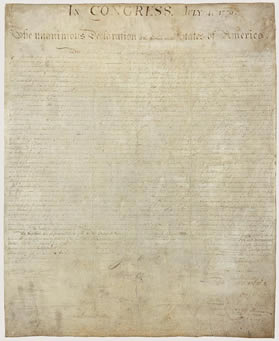
The analogy above can be extended to understand the effects of any lighting condition. Lets consider the cumulative exposures to light that would occur in a typical room/office illuminated by bright fluorescent lamps (500 lux), in which case, with 8 hours of illumination each day for one year, a modern stamp would be exposed to (500 x 8 x 365) or 1.5 Megalux a year. At this rate, the 30 Megalux bucket of the modern stamp would begin to overflow after about 20 years of cumulative illumination (30 Megalux = 1.5 Megalux x 20 years). If 20 years seems to you to be very far in the future, consider the Declaration of Independence on the right; but for the uncomfortably low sub 50 lux of illumination used in the National Archives, the Declaration of Independence would long ago have faded from existence. It should be noted, however, that under 50 lux of illumination, even moderately lightfast materials like modern stamps (stripes 4-6) will eventually show fading after about 200 years. However, before concluding that 50 lux, 200 lux, or some other amount of VISIBLE light is an acceptable amount of illumination, lets step into the “bucket” further to see how else it can be caused to overflow.
Effects of VISIBLE Light on 19th and early 20th century stamps
The appearance of the stamp below seems to indicate that it was exposed to light for an extended period of time. How much time? Consider if instead of 32 Megalux of illumination, our bucket was able to hold only 3.6 Megalux. 3.6 Megalux is the threshold at which the 3rd stripe from the top on the “Blue Wool” scale begins to fade. In fact, the 3rd stripe mimics the lightfastness of the stamp to the right as well as most 19th and many early 20th century stamps and philatelic items, which because of the fugitive inks (reds, oranges, carmine, etc.) and type of paper used in their manufacture are much more susceptible to light induced fading and damage (i.e. a 3.6 Megalux bucket will overflow about 7-8 times more quickly than the 32 Megalux bucket of a modern stamp). Stated another way, even if a 19th or early 20th century philatelic item had been stored along side the Dead Sea Scrolls in a darkened cave for 2000 years, once it was removed and illuminated under room light conditions (300-500 lux), it could begin to show signs of fading in as short a period of time as 2 or 3 years (vs. 20 years for a modern stamp). That said, even 2 or 3 years may be an overly generous allotment of time, as we must also keep in mind that the “light buckets” of most stamps have already been filled to some extent from a multitude of past VISIBLE light exposures.
Very real world past exposures to VISIBLE light that may have already occurred to cause the “light-bucket” of your stamp or other philatelic item to overflow:
- the exposures to VISIBLE light that could occur at annual philatelic stamp exhibitions under normal room light (500 lux), for example, for one week (7 days) for 8 hours a days over each of the last 100 years, or equivalently (500 x 7 x 8 x 100) = 2.8 Megalux of cumulative exposure;
- the exposures to VISIBLE light that could occur during periods of personal viewing your stamp collection under normal home/office room light (500 lux) for 30 minutes a month (6 hours a year) each of the last 100 years, or equivalently to (500 x 6 x 100) = 300,000 lux of cumulative exposure;
- the exposures to VISIBLE light by stamp dealers and stamp auction firms that could occur during periods of showing in display cases under normal office light (500 lux) for 8 hours a day for 30 days once every 20 years (offered for sale 5 times in 100 years), or equivalently (500 x 8 x 30 x 5) = 600,000 lux of cumulative exposure;
- the actual exposure to the light that occurred at an International Exhibition Hall used by Federation Internationale de Philatelic (FIP) where some philatelic items were exposed to over 3000 lux for 8 hours a day over a 7 day period, or equivalently (3000 x 8 x 7) = 168,000 lux of cumulative exposure.
The preceding examples of possible previous exposures to VISIBLE light cumulatively add up to more than 3.6 Megalux, which in the case of the 3rd stripe of the Blue Wool scale (or equivalently a 19th or 20th century stamp) would already have caused its “bucket” to overflow; any other exposure to VISIBLE light would only cause further fading and damage.
And don’t forget there are other exposures to VISIBLE light that may have already also occurred and already caused damage to your stamps:
- the cumulative exposures of stamps to VISIBLE light from flash photography;
- the cumulative exposures of stamps to VISIBLE light from photocopy processes;
- the cumulative exposures of stamps to VISIBLE light (direct sunlight?) during transit in the mails or before the availability and use of indoor illumination to view stamps;
- the cumulative exposures of stamps to acidic paper stamp album pages, storage containers, or albums;
- the cumulative exposures of stamps to improper conditions of temperature and relative humidity;
- the cumulative exposures of stamps to harmful plastics;
- the cumulative exposures of stamps to micro-climates;
- the cumulative exposures of stamps to water mark fluids, peroxide, tap water, and other chemistry experiments;
- and of course, the cumulative exposures to UV light.
How many of the exposures presented above have already occurred during your collections’ lifetime? Are you now willing to take on the challenge of preventing these exposures from occurring in the future? Although it is true that enjoyment of your items of philately requires “some” exposure to VISIBLE light, you should easily be able to reduce the amount of this exposure after you consider the implications of the examples given above - can’t you?
This page concludes with an image of what is presently one of, if not, the most well known U.S. philatelic treasures. As held in the hands of the proud owner, this philatelic item has been secured between two thick clear plastic (or possibly glass) blocks. If you have viewed the other pages of this web site, your first thought may lead to the conclusion that the owner’s method of display can be used to eliminate the harmful effects of paper products (other than the paper of the stamp itself). Or the conclusion may be that encasement or encapsulation of the stamp in the manner shown suits itself well to items of particular aesthetics, history, and value because they can now be viewed, displayed, and stored without worry as to their damage from physical handling or display. You may, however, wish to reconsider your conclusion(s). Putting aside any considerations that a harmful micro-climate may be formed within the semi/sealed space between the clear plastic blocks, or that harmful plastic may be being used, it appears that the physical encasement of the stamp may have given the new owner a false sense of security, for in fact, this philatelic treasure has been openly exposed at more than one stamp exhibition/show, to not only to the bright VISIBLE light of the particular venue, but also the bright illumination of additional display cases that were used to keep the stamp protected from theft. On their own, perhaps these exposures to VISIBLE light may still have a ways to go before filling the 3.6 Megalux bucket of this stamp occurs, but can there be any doubt that previous owners of this philatelic item have in their own manner (perhaps the ones given above) also exposed this treasure to VISIBLE light, in which case, how much longer before this treasure (or similar treasures in your collection) will become irreversibly damaged.
Your Stamps Are Art !
Whether you are new or old to philatelic stamp collecting, you may have never thought the little pieces of philatelic paper hidden away in your stamp album to be art, and even if you have, it may not have been in the context of the type of art that is typically displayed on the walls of museums and private homes.
This portion of this web site asks you as a philatelist to consider whether your philatelic items may have some of the same aesthetics, history, and value of art and whether these characteristics might justify their being brought out of the “closet” to be viewed and displayed as such.
Even if you disagree with the premise that items of philately and Stamps Are Art, we challenge you to reflect upon the care your philatelic items and stamps are presently being given, and whether there might be improvements you could make to match the level of preservation and care given those “big” pieces of paper being cared for by those in the fields of art preservation and art conservation, whether it be during periods of their storage, viewing, or display.
In return for the time and effort you devote to the preservation and care of your philatelic items, your collection will reward and repay in kind with an increase in value, not just from an increased likelihood that it will survive longer (i.e. its rarity), but also via a reduced likelihood that it will be damaged (i.e. the rarity of its condition).
Visit our links to the left to learn more about the effects that paper, plastic, temperature, humidity, visible light, and ultra violet light have on the aesthetics, history, and rarity of your stamp and philatelic art. In doing so you will learn how your stamp care and philatelic care (your use of philatelic preservation techniques) can take advantage of known art preservation and art conservation techniques used by those involved in the preservation of art and conservation of art.
Are Your Stamps Art ?
The Mona Lisa stamp falls within a category of stamp collecting known as Topical collecting. Topical stamp collecting can be used to enhance the enjoyment of just about any personal interest, including that of art, whether it be art in the form of prints, paintings, photography, etc.

With regard to our question, lets first look to the Mona Lisa painting and the definition of art.
Art:
- skill acquired by experience, study, or observation
- a branch of learning
- the conscious use of skill and creative imagination in the production of aesthetic objects
- decorative or illustrative elements in printed matter
- The Mona Lisa stamp is art because it displays art on a stamp, in other words, it embodies “decorative or illustrative elements in printed matter.”
- By definition, all stamps can thus be considered to be art.
- However, as with the Mona Lisa painting, Stamps Are Art because they can also be appreciated for their aesthetics, history, and value.
- Click your mouse over the philatelic items below to view some examples of stamp aesthetics, stamp history, and stamp value.
Stamp aesthetics
Stamp aesthetics … some stamps have more than others
Of course, aesthetics will always be in the eyes of the beholder … or collector … as the case may be.
Gold dollars shown for scale
Can it be that twenty stamps joined as a pane have the same or even more aesthetics?

What about six joined panes in the form of an uncut press sheet?
Perhaps we will leave the determination of aesthetics up to you.
Stamp history
Stamp history … some stamps have more than others
All stamps have a philatelic history to share with us, some have more, some have less. Take for example the philatelic treasure known as the 1847 Rush cover/letter. This item of philately features an uncut strip of six 10 cent George Washington stamps. The 10 cent George Washington stamp was the second official stamp issued in the United States; the first was the 5 cent Benjamin Franklin stamp.
Philatelic History of the Rush Cover
Not only does the Rush Cover have a philatelic history, it can be used to document and teach it as well. In 1840, England issued the world’s first official adhesive backed stamp (i.e. the 1840 Penny Black). In the same year, the English based Cunard Line began to deliver mail between Boston and Liverpool. It was delivered using steam-powered vessels, which cut delivery time in half. In 1847 it was America’s turn to issue official U.S. postage stamps.They were issued in the 5¢ Franklin and the 10¢ Washington denominations. In 1847, the Cunard Line’s monopoly ended when the U.S. government-subsidized mail-shipping company, Ocean Line, started to sail between New York and Bremen, Germany, via Liverpool, where the English-bound mail was unloaded.
Early after the 1847 stamp was issued it was standard practice to prepay only the U.S. portion of the postage needed to send mail overseas, e.g. 5¢ under 300 and 10¢ over 300 miles. Letters that were sent via the Cunard liners were charged with an additional English rate of 24¢, while the American Ocean Line charged 24¢ from New York by adding 5¢ or 10¢ if posted elsewhere. Until 1849, England did not accept prepayment when letters were sent via the U.S. Ocean Line, instead they charged additional postage, the rate being known as the “discriminatory rate." The U.S. retaliated in 1848 by doubling the charge on Cunard letters that were prepaid, the rate being known as the “retaliatory rate.” As a result, a few “rare” prepaid letters from this period exhibit the double 29¢ retaliatory rate, which was paid as 60¢ in the form of 1847 issue stamps. The Rush Cover is one of the few examples that documents the history of this period with its cover of six 10¢ 1847 stamps.
The Rush Cover was mailed by Benjamin Rush to his father Richard Rush, the U.S. Minister of France. The mailing was made in September 1848 in Philadelphia and was sent via the Cunard steamer Europa. Benjamin Rush paid the retaliatory rate of 48 cents and 10 cents for delivery of the letter from Philadelphia to Cunard’s docks in New Jersey. When Richard Rush received the letter, he had to pay the discriminatory rate of about 66 cents, which was shared between Britain and France.
The Rush Cover has been offered for sale four times. In 1910, it sold for $110. In 1944, the cover sold for $4,000 at the Collectors Club of New York. In 1971, it sold for $18,000. In 2005 it sold for $1.2 million dollars.
Stamp value
Stamp value … some stamps have more than others
Did you know that on a $ per ounce basis, many philatelic treasures are more “valuable” than the Mona Lisa !
© 2006-2024 StampsRart